Cowboy Graffiti and Water Wars at Newlin Ridge, Florence, Colorado
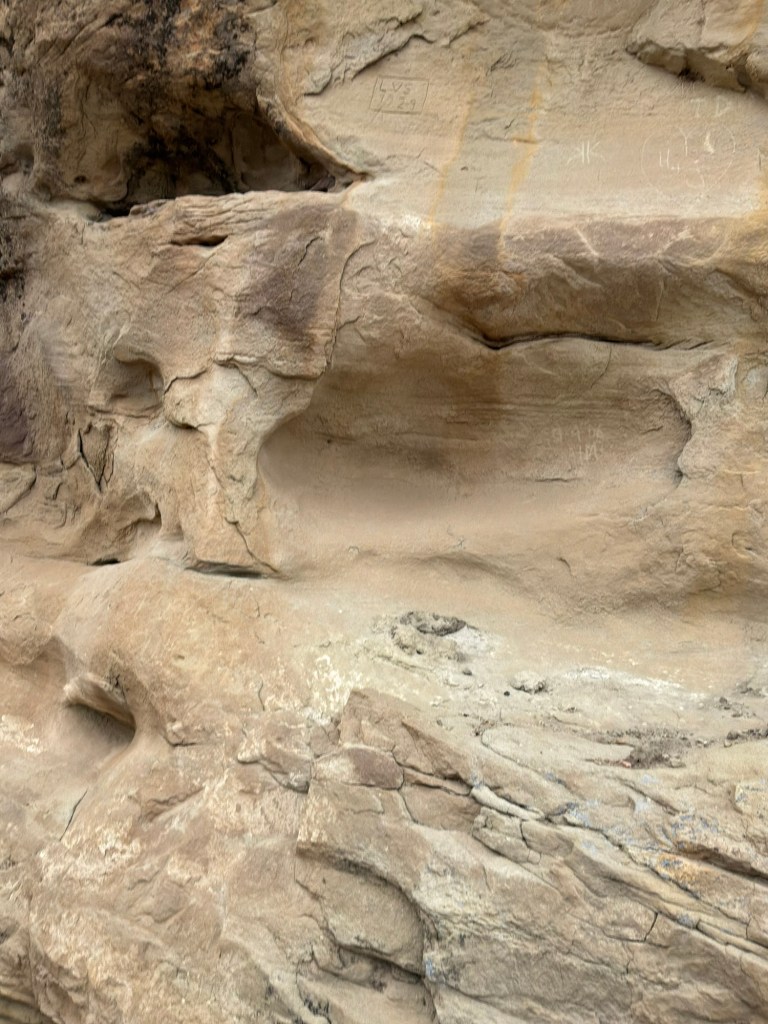
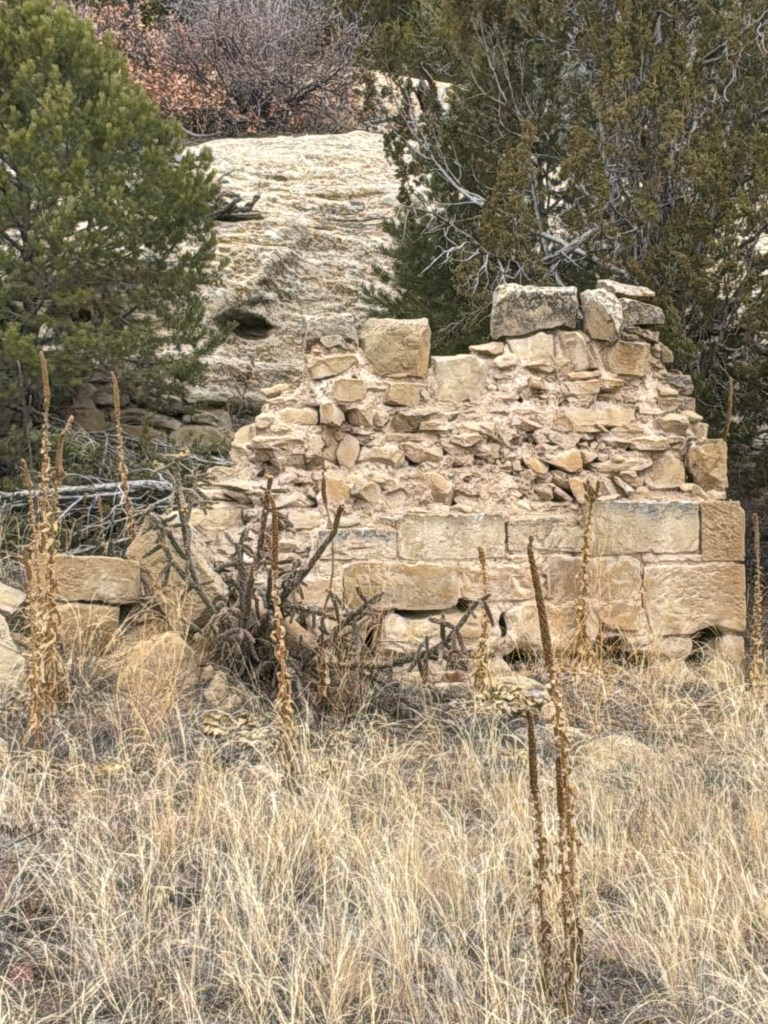
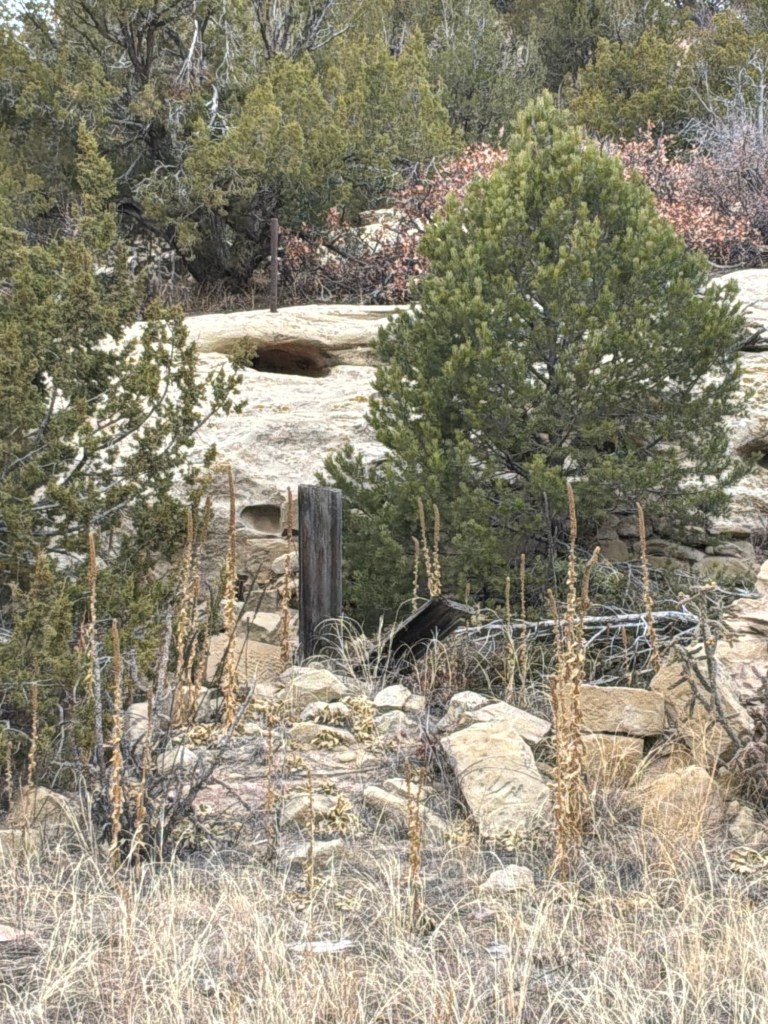
I discovered these new-to-me carvings on one of my excursions south of Florence yesterday. While getting footage of the old building ruins, I examined this rock face and to my surprise there were old carvings up there! I am over the moon anytime I discover something, this was exceptional. I wonder why in the last 30 years of working and traveling, I’ve never noticed these nor hear about them. I believe the symbol at the top to be a cattle brand perhaps?
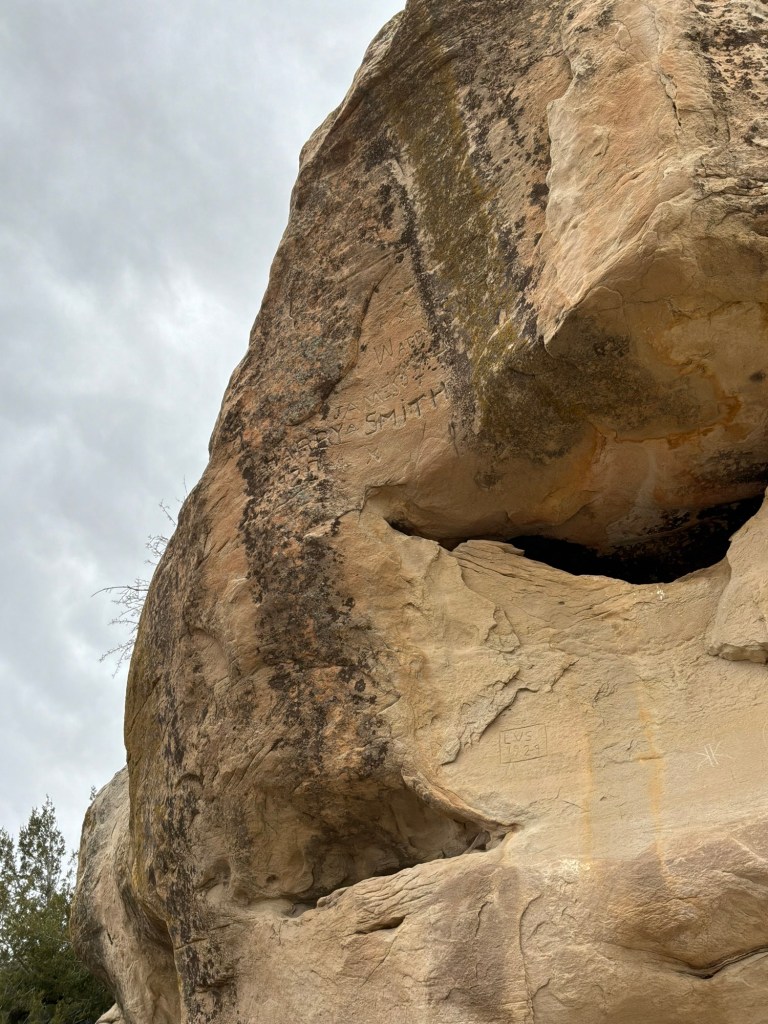
Newlin Creek is a very significant piece of the Florence, Colorado puzzle. Newlin Creek would change the way water was delivered for Florence in the early 1900s. Water was a challenge to procure for the influx of settlers coming into towns, everywhere. The water was amazing, but also troublesome to secure for use. The ranchers that were using Newlin Creek were suddenly left without water for their ranches when Florence diverted the water to a new dam in 1899. The new dam would then use water pipes to deliver the water to the area of South Union in town.
After the city purchased the land and water rights from Seth Wright, the projects to bring water to Florence began immediately. The land was leased back to Seth Wright who lived in the cabin before passing away from Asthma the same year the dam was being built, in March of 1899. Those water right did not have inclusions for other ranches below.
A lawsuit was found in a newspaper dated June 21st, 1899. The plaintiffs Wasmuth and Smith had an injunction suit against the city. The decree offered orally by Judge Bailey said “The court decrees that the plaintiffs have valid water rights out of Newlin Creek and are entitled to the natural flow during the spring and summer irrigating season. If there should happen to be a surplus during the irrigating season, the town of Florence may divert it.” Later that summer, another article claimed that the town board was ignoring the judges decree, and they still fought for the water. The town board was still diverting all of the water to the dam and withholding it from the ranches.
City officials were charged with contempt and another chapter to this would begin. They were to be brought to Judge Bailey’s chamber to answer for the reasons that they were still not giving the water to the involved ranches.
The court case would stem from the contempt charges on July 31st, 1899. The judge appointed Sheriff Hawkins, Water Commissioner Newkirk and D.H. Houston to investigate and ascertain where or not there was sufficient water for the ranches of Wasmuth and Smith. The water was turned into the creek and the committee drove out there to check on the matters. The article stated that if there was not sufficient water for their irrigation purposes it would be turned back into the water diverted to the dam. The judge effectively said that they would not divert anymore and turned the water back to the city.
Then in August of 1899, Judge. Bailey gave permission to the mayor to turn on the waters of Newlin Creek, opening the water into the city pipes. By 6:30 mountain water was flowing into the reservoir for use in the city. Though a major step for the citizens and the city of Florence, a major step back for the ranchers. This article also states “This in effect is a signal victory for the town over Mssrs. Wasmuth and Smith.”
The stories erupted in the newspaper regarding the residents and their eccentric use of the water that they now prized. One snippet said that Dave Rowe was the first to wash his sidewalk with the water, and that the pressure was enough to throw water over the roof of the engine house. There were advertisements from local businesses about taking baths in the fresh mountain water of Newlin Creek.
In February of 1900, Wasmuth and Smith were still fighting for removal of the dam. Their attorneys, Macon and Lock, called upon the town to remove the dam at the head of the city water works. Then after a long fight, it went to trial by jury as a condemnation suit. 12 men would sit as jury in Judge Bailey’s court. This suit would list the City against A. Wasmuth and Jane R. Smith.
The city asked that certain land and its water rights be condemned for its use. Judge Bailey directed the jury to find values for the land and the water. The jury handed a verdict valuing the land, but not the water. The jury was instructed out again to return with the value of the water. The jury came back with Jane R. Smith $4,000 and August Wasmuth $3,500. Neither side was pleased with the results. Then, on May 10th, 1900 the clerk issued a draft for $8,013.85 to cover the amount due to Wasmuth and Smith as damages for water rights and costs of suit.
By 1901, news from Newlin Creek would shift from water and cattle to drilling and mining as all the water “settled”. Oil was struck on the Wasmuth land by the Independent Oil Company. The oil was not significant enough as of November 26th, 1900, but they began to dig deeper. J.C. Palmer of Cripple Creek was reported as having a conference with August Wasmuth about securing a lease on his ranch to drill for oil. They would not get the bid, but oil production still started with the formation of another company, the new company composed of Judge M.S. Bailey, James T Locke and Lee Champion all of Florence. The ranches leased were Walter’s Ranch, Wasmuth Ranch and Williams Ranch (Judge Bailey… really?!) The Wasmuth Ranch then sold to Colorado Springs Capitalists in 1903 for $12,000 in cash.
The Newlin Creek Coal Company would begin producing a good amount of coal on Alex Smith’s ranch that opened in February of 1901. The need was rising for coal due to other mines closing down was growing, and Florence would need much of this coal to keep homes cozy. The headline for this story was “A New Coal Company Composed of Local People.”
Another article stated A.M. Smith still had cattle that he checked on nearby in August of 1901.An article from March 1st, 1906 was about a land deal with S.P. Smith, a prominent independent coal operator and Alva Adam’s, ex-governor regarding the lease of lands for Coal Mining. The sale included surface improvements, all the cattle and horses, and was for 160 acres. He also bought more land including the old Wasmuth Ranch from other sources giving him a total of 520 acres. Mr. Smith and his sons immediately got to work prospecting the land. The Smith’s also operated other mines in Williamsburg.
Another article stated that they Wasmuth family were pioneers of the county when Mrs. Ann Wasmuth died in August of 1904. She is buried in Union-Highland Cemetery. August Wasmuth was in the Florence Daily Tribune published September 11, 1905 regarding the quality of his pear tree and how much fruit he figured he would see that year. “The limbs and branches are loaded to such an extent that they are almost touching the ground with their weight. Mr. Wasmuth said there would be at least 1,000 pounds of fruit on the tree this year.” At minimum water was found somewhere for the ranch by this point. Though I don’t see any more articles about that water fight.
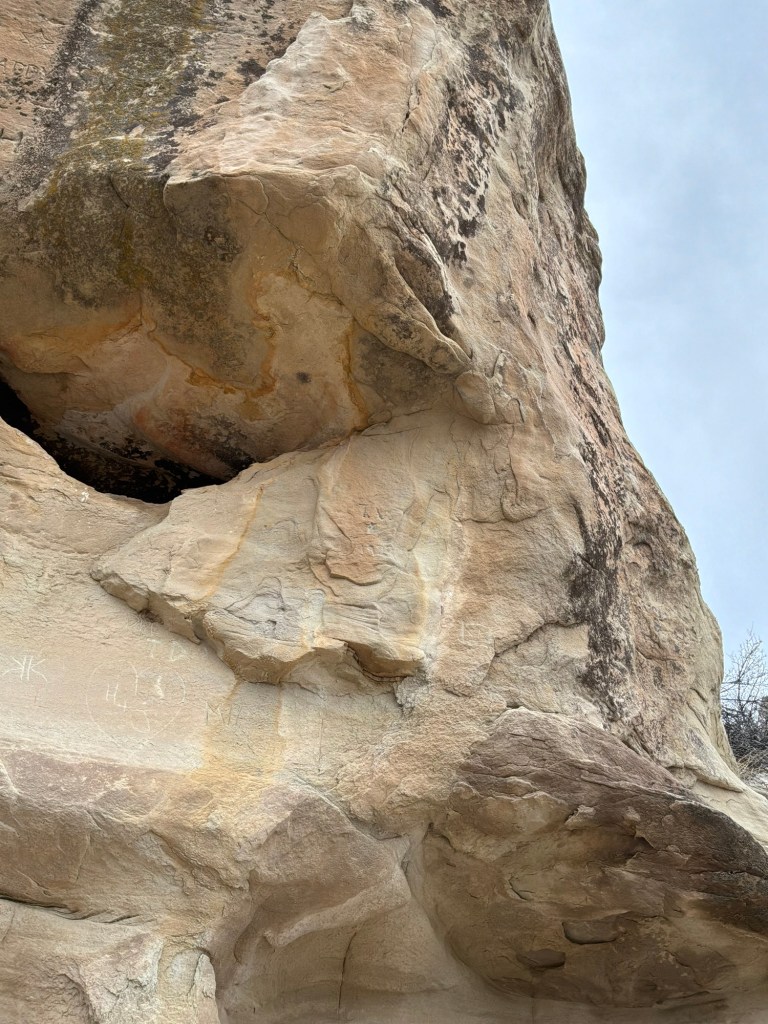
That officially brings us to this ridge and why the Cowboy Graffiti from past times resides on this spot. I am enamored by the simplicity of the marks on the rock and the fact that they have so much history behind them. Are these the marks of their children? I would guess so, or a very strange coincidence that a group of Smiths decided to mark this rock 15 years later.
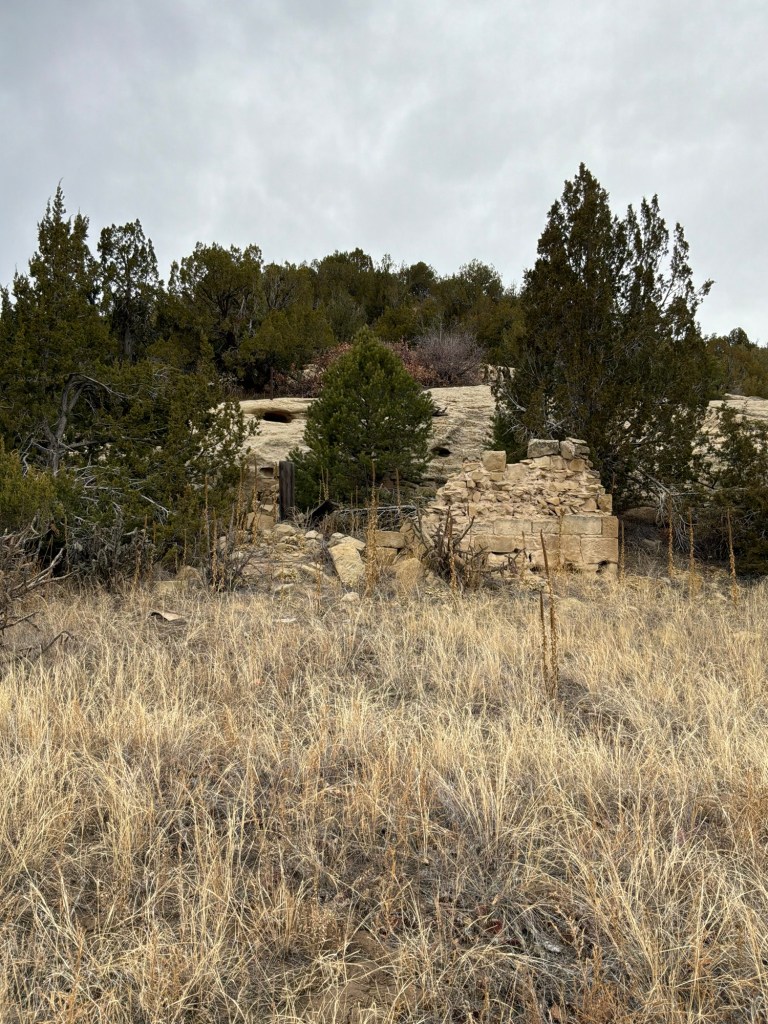
I’ve known about the structure/ruins there for many years, but only now have I noticed these markings! There are ruins of what looks to be a building close to this ridge in the photo/video. Both can be seen from County Road 15 right of way, at Newlin Creek Subdevelopment entrance. I will post videos and photos of the structure as well!
Today that source water is still used by the City of Florence and its rough beginnings were interesting to read about. Though I have to admit that these carvings mean a lot more to me, knowing that these families had to fight to have the rights to the water that once flowed down the valley to them. And furthermore how they had to adapt to their new surroundings and way of life.
And as I personally have worked and lived in this area all my life, the articles I read left me torn between the Great Little City I love and the life that was there before. For centuries, resources have been a thing of war. But that is another story…
Thanks for reading!
 Not Forgotten Colorado
Leave a comment