WARNING: May have some content that may be disturbing.
This is the gravesite of Henry Hawkins, D Henry Priest, Mildred “Millie” Price, and “Bennie” Legg. This tiny cemetery rests on the side of a hill along highway 115 about 10 miles south of Colorado Springs.
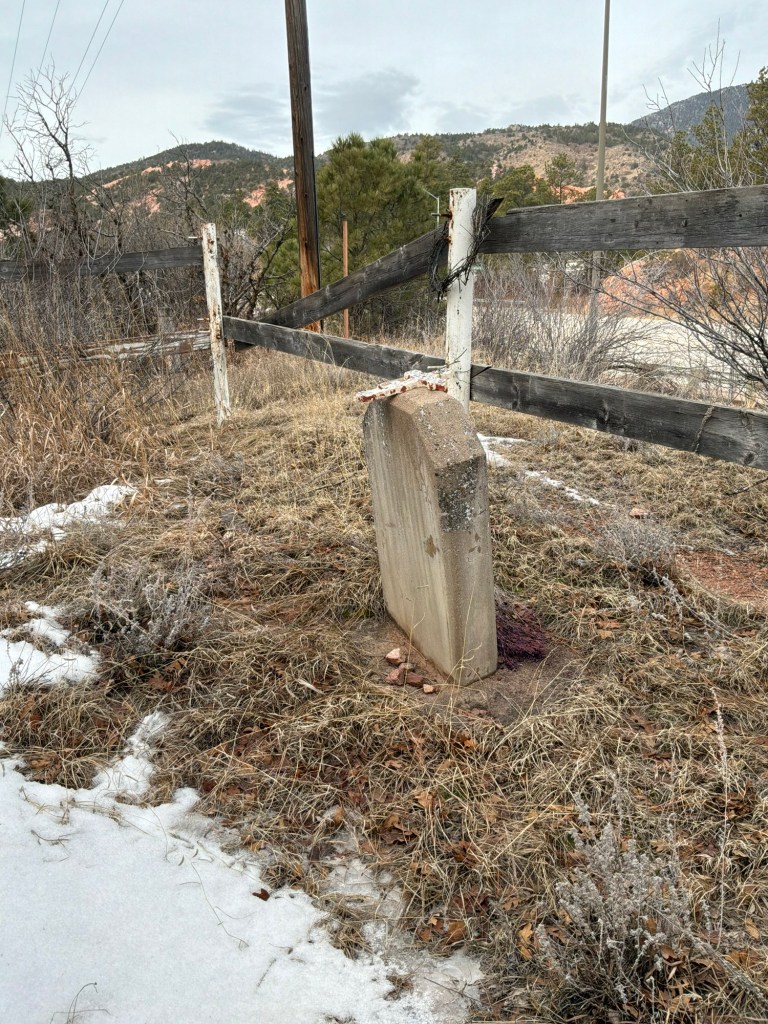
The cabin of Henry Harkins (sometimes spelled Harkens) used to sit where the highway bends, on Fontain Qui Bouit. The small homestead was in a lovely valley. The tiny road twisted down into the valley and a small grassy area was a perfect home for Henry.
The valley was shook by horror that befell this quiet place when the “Bloody Espinosas” came though. A few other homesteaders nearby planted their crops quietly in fear that the horror of them would return for weeks. Some said they did not plant at all and that Spring would have to wait. The Espinosas are said to be the reason this valley is referred to now as “Dead Man’s Canyon”. News of the violent brothers spread and with the death of a nearby man, the valley fell into a different quiet. Still and silent.
In March of 1863 the “Bloody Espinosas” came to the home of Henry and stabbed him in the back, then took an axe to his head. He was found later that night lying next to his cabin. Little was it known yet that the Espinosas had been the culprits.
Louis Priest, who had recently moved to a nearby homestead from near Alma, Colorado, became good friends with Harkins. While out hunting on *March 16th, with his son also named Henry, Louis found Mr. Harkins near his cabin. He had been severely mutilated. One article says shot, another says stabbed. All say he was ended by those that came at night. They went in search of the murderers after burying Henry there.
Late at night there are reports of screams echoing in the hills. The ghosts that roam here are lost, and trying to find their way according to legends. Legends began about ghost riders waiting on the ridge to torment anyone who dared into the canyon.
According to the records, the “Bloody Espinosas” would kill 35 in total before Tom Tobin would end the tirade. Other sources would claim 32. This story has much more, but we are here to talk about Henry, so I will move on from them.
The dates are all skewed. The newspaper article from the Rocky Mountain News with information pertaining to Henry was dated May 27th, 1863 states “May 16th, 1863; Editors news – Everything is quiet again on the Fontain qui Bouit, and however fearful as the excitement was at one time, it was not so intense as has been represented. Neither have the outrages been so numerous as would appear from the public prints. The murder of Mr. Harkins, the shooting of Mr. Templeton, and perhaps one or two others, and the stealing of a small amount of property, comprises the sum total of the depredations committed along the valley of this creek. It has been said that the farmers here had quit planting in consequence of fear of the guerrillas; such was not the case.” The purpose of this letter to the editor surely being that of reassuring those in the valley that all was alright and over.
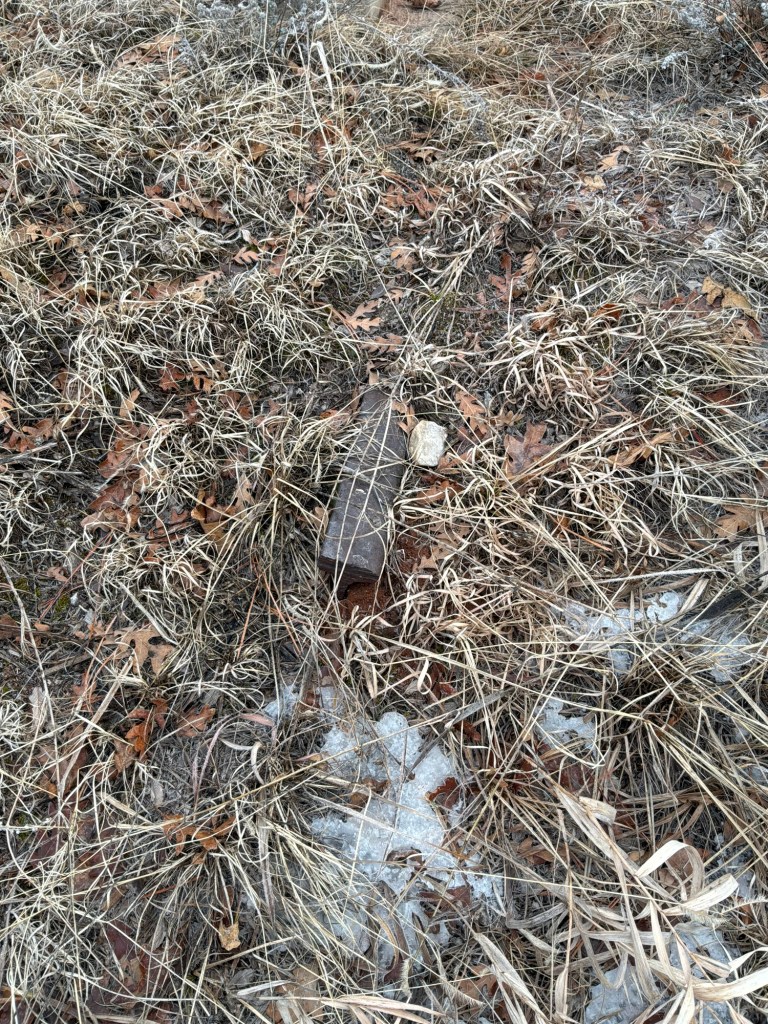
The valley eventually went back to life, though not quite the same. Two other homesteaders in the valley buried their young children there after on unknown dates. Mildred “Millie” Price, who was believed to have been 5 years old and passed away sometime around 1875. She was the step child of Lewis Priest according to the info I found, but there is no proof of that. The other child, Bennie Legg has unknown birth and death dates as well.
June 5th, 1955 the Rocky Mountain News did a story on the incident naming Elsie Keeton as the person that named the children in the graves, she is said to have told the account of remembering from Henry Priest before he passed away. She states in the article that “Louis Priest came from Buckskin in Summit County”. At that time there were no official roads through the canyon and Mr. Harkens led Priest to the valley where he would live. Mr. Harkins was said to have also come from Buckskin (Not to be confused with Buckskin Joe near Cañon City as several articles did. Buckskin was near Alma, Colorado).
Henry Priest, the boy who found Henry with his father Louis, asked to be buried with him after living at the poor farm and passing away in 1933. He was around 82 years old. He remembered Mr. Harkins and his family had called him “Uncle Harkins” because he was always ready to help anyone that needed it. Another article that I encountered stated that McPherson and Bassett (?) are the ones who found him dead, they were said to be moving a sawmill to the area from Cañon City. They left Henry Harkins to finish building the cabin and came back to find him dead.
I actually don’t know the truth of this, because the story changes over the years, even in the accounts of the newspapers. The date of the murder is not steady, nor are some of the articles.
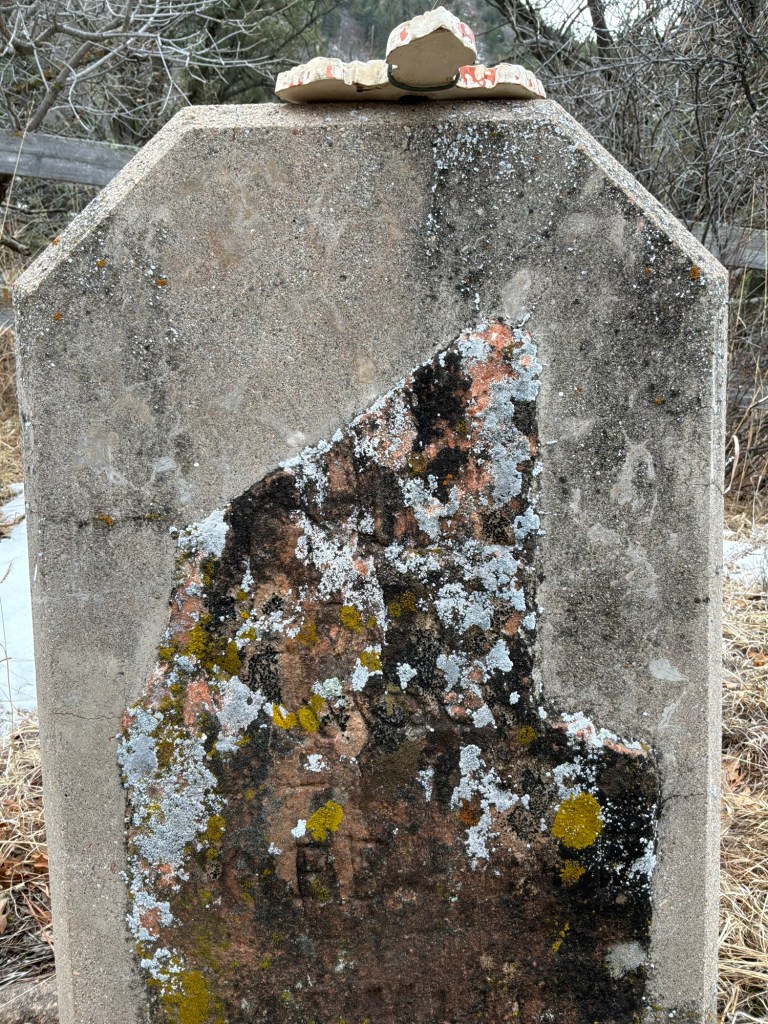
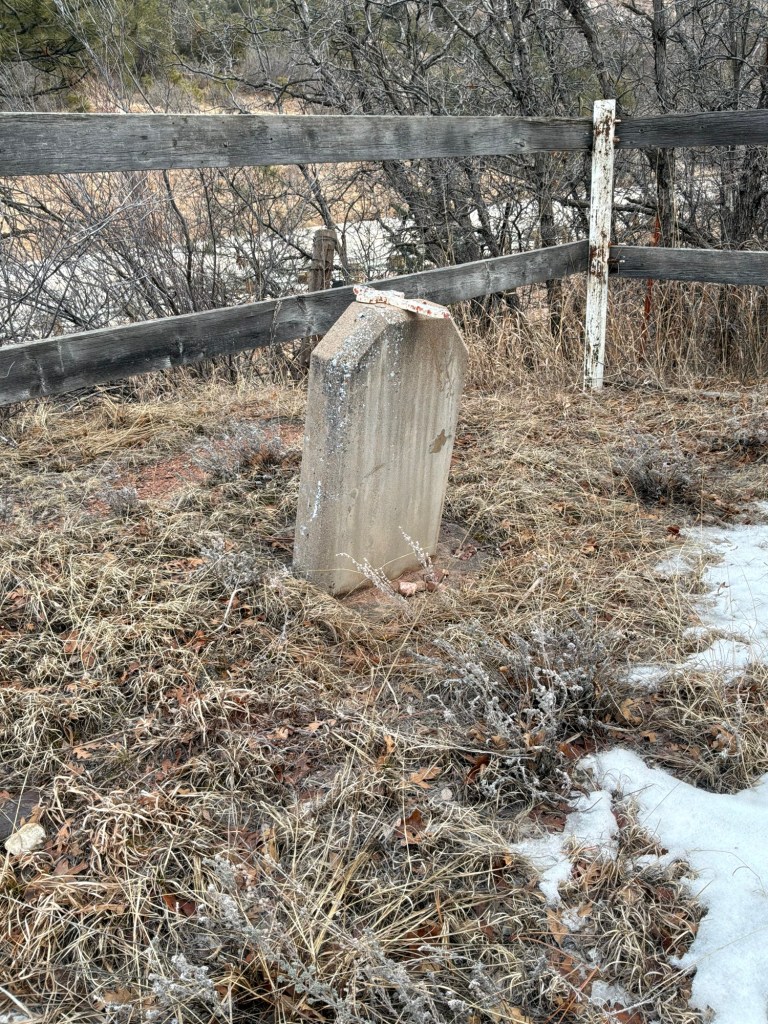
The headstone was said to have been made by Henry Priest and hand carved to say. “Henry Harkens, murdered Wed Eve. Mch 19, 1863.” this bit of info coming from Elsie Keeton again as Henry Priest had told her.
Much later, when the Espinosas were found, Henry Harkins gold framed glasses were said to have been found with them in this same article that was an accounting of Elsie.
The small cemetery is nestled right next to Fort Carson land on 115, a small white fence can be seen quickly, if you know where to look. I do not recommend a visit to the dangerous side of the road. Traffic was crazy and I felt it was not safe, no appropriate parking was available. In the 1950s all 4 graves were moved to where they rest now from hairpin corners that were once there. An article in the Gazette on March 27th, 1947 protested against moving them, but ultimately for safety they were given a new resting place on a small hill, out of traffic and right of way.
 Not Forgotten Colorado
Leave a comment