Michelangelo’s famous sculpture is replicated for this beautiful resting place. This Columbarium monument is made to hold the ashes of loved ones and has several niches to put cremains into.
The statue is Pietà. The original statue means Pity or Compassion. It is a renaissance masterpiece and was stunning to view a replica of it. As I’ve only seen photos. He sculpted the statue in 1498 to 1499.
I happened upon this while wandering around the Mountain View Cemetery in Pueblo, Colorado. The sun shining behind the statue was quite a beautiful experience and I needed to share this with you. Life is so short and this is a beautiful place to rest. The names on the monument are not going to be listed in this video as they are recent and still mourning. I want to wish you peace and love in hard times. You are not forgotten. Rest in Peace to all of you.
An image of the Virgin Mary cradling the mortal body of Jesus after his crucifixion. After his Descent from the Cross. What a beautiful representation of holding onto the worldly body of a loved one. The loss is mourned by those we love in the same way. This relays a message of ultimate loss and mourning.
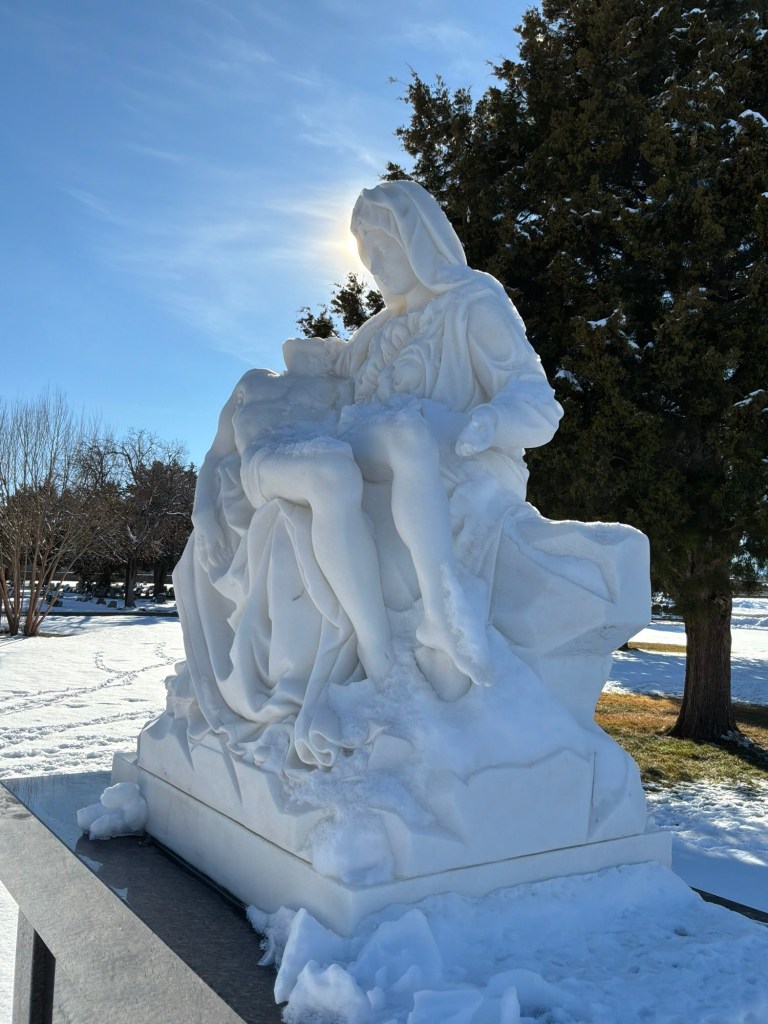
My direct interpretation of the use of this statue is that the spirit leaves behind those grieving for us. We have little left to embrace if anything at all. As I’ve said before, monuments are for the living, not the dead. They are there for us to remember who they were. Remember that after we use our vessels, we are but bodies to be interned to the earth. Dust to Dust.
I share gravestones and cemeteries not as a sad reminder to the living, but a reminder that death becomes all of us eventually. Remember those we’ve lost and live lives to the fullest when we can. Those memories we build are the memories that will be carried by the living when we are gone.
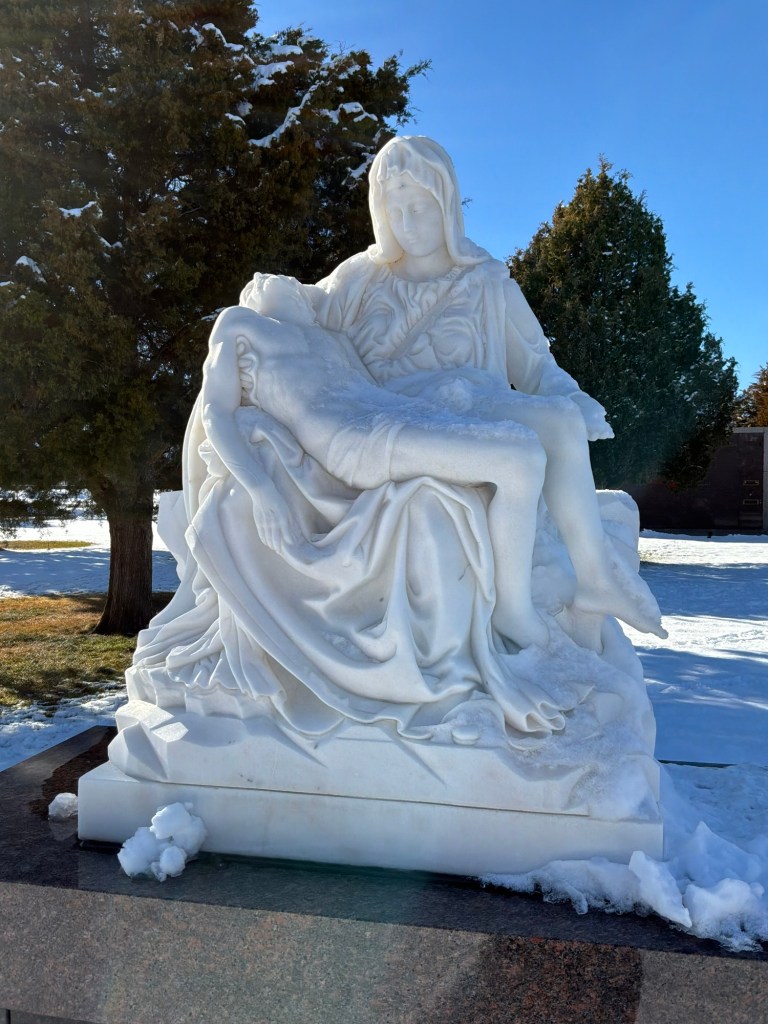
Michaelangelo depicts the human and spiritual aspects in many of his sculptures and paintings. Legends and Holy Spirits.
The original statue was made of Carrara Marble and it is housed in St. Peter’s Basilica in Vatican City. Sources say that this is the only piece that he affixed his signature to. Legend says that when he learned it was being viewed as another artist, he carved his signature into Virgin Mary’s sash.
There were many other versions of the Pietà, some in painting form, others in various forms of sculpture, and some small wooden samples, all telling the same story. There are some versions that show God holding him as the father. Viewing all of the different forms of this vary widely between location and art form. A 15th century version made of wood called Dieffler Pietà is primitive, yet full of detail. As an artist, this had me enamored for quite the time looking at the history.
 Not Forgotten Colorado
Leave a comment