Amy Aretha Terry
San Isabel View Cemetery in Hillside, Colorado
Born September 23rd, 1869
Died April 25th, 1904
I usually write my own story but in this case I will transcribe what the obituary in the gravestone says for her part of the story. It reads…
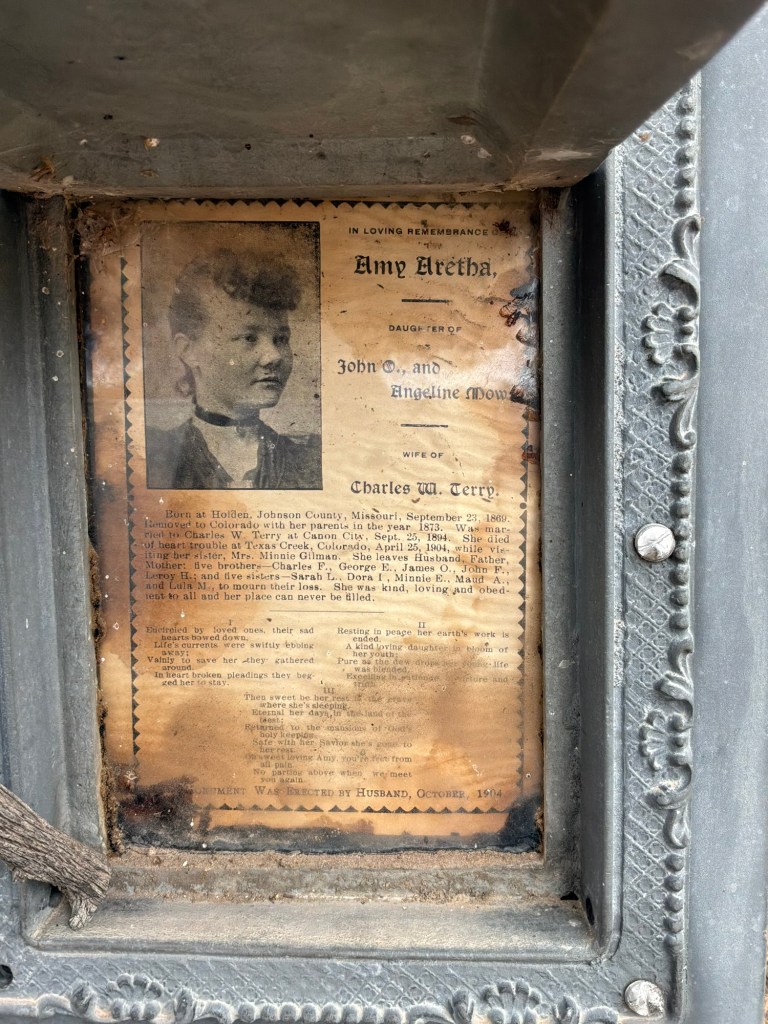
“In Loving Remembrance of
Amy Aretha.
_________
Daughter of
John O and Angeline Mow.
_________
Wife of
Charles W Terry.
Born in Holden, Johnson County, Missouri, September 23, 1869. Removed to Colorado with her parents in the year 1873. Was married to Charles W. Terry at Canon City, Sept. 25, 1894. She died of heart trouble at Texas Creek, Colorado, April 25, 1904, while visiting with her sister, Mrs. Minnie Gilman. She leaves Husband, Father, Mother: five brothers- Charles F., George E., James O., John F., Leroy H.; and five sisters-Sarah L., Dora I., Minnie E., Maud A., and Lula M., to mourn their loss. She was kind, loving and obedient to all and her place can never be filled. “
There are a few verses after and a line stating that her husband erected the monument in October of 1904.
He chose a great place to lay her at rest. She was buried at the back of the cemetery overlooking the mountains and the cemetery. The tree next to her gives her shade and cover. This one was just really in the perfect spot if there is such a thing.
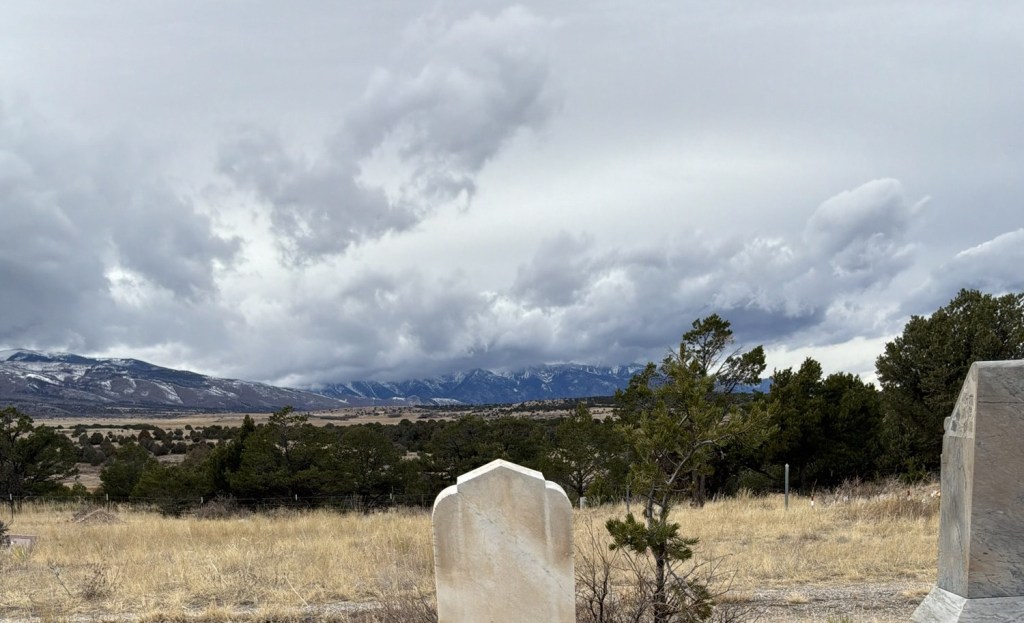
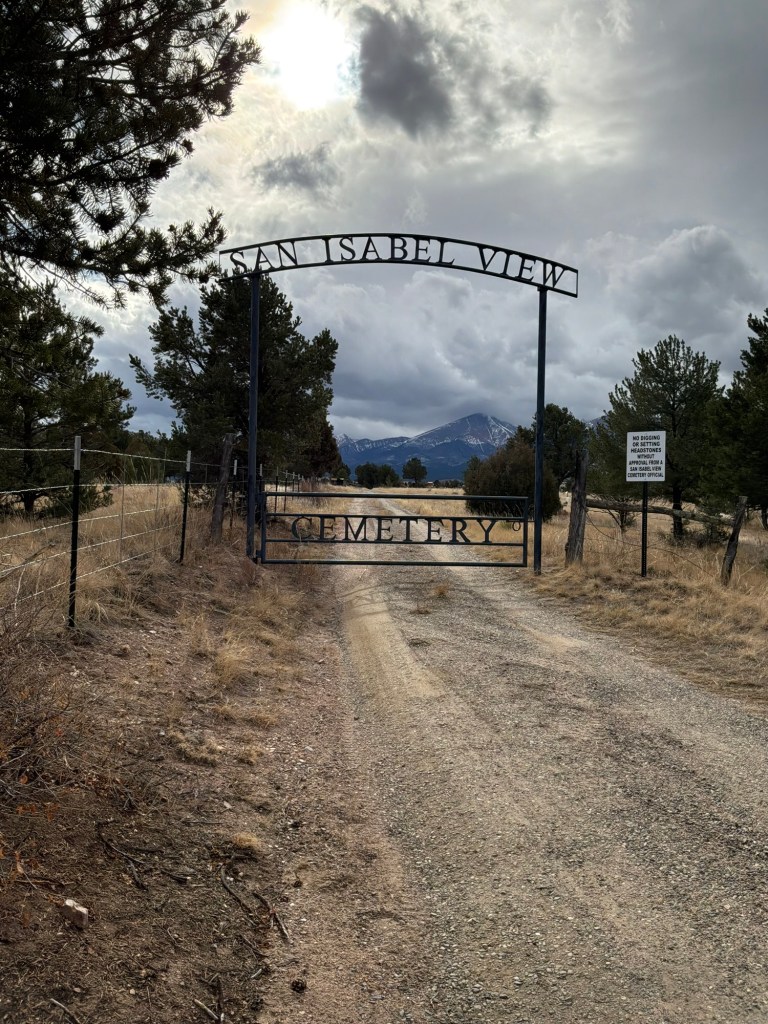
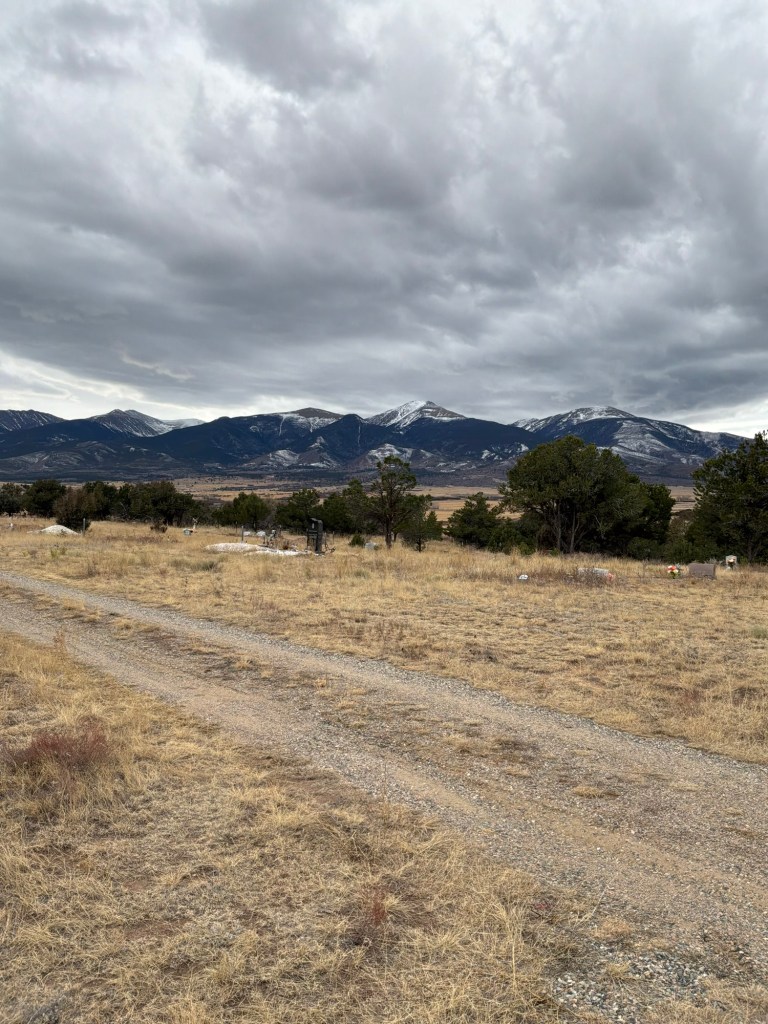
The mountain view from this cemetery is outstanding and so majestic. Hence the name of the cemetery “San Isabel View”. The older section of this cemetery is not to be missed if you are fond of cemeteries. The stones are mostly in outstanding shape for being on the side of a hill. As with all pioneer cemeteries, this one is on a hill, not far from Hillside, Colorado.
Her headstone has a bit of history itself. When the print in the window states that the marker was erected by her husband, this really meant he put the kit together to build the headstone. They came as a set with instructions on assembly. They were low cost and popular at that time.
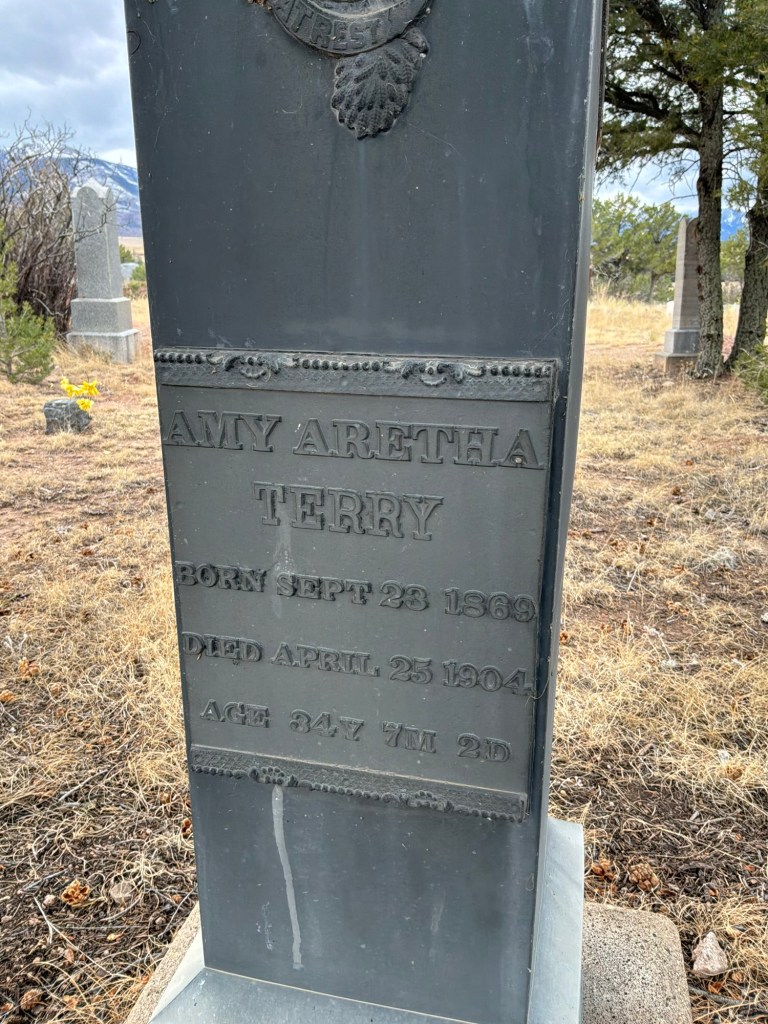
These types of headstones are called “Zinkers” “Zinkies” or “White Bronze”. They are hollow and made of cast Zinc. The panels could be customized to have the inscriptions and information on them. Monumental Bronze Company and it’s subsidiary American Bronze Company often sold these as durable, and everlasting “stones”. Stating that they were not porous and would outlast any stones. They were one of the main manufacturers of these monuments, though I admit I forgot to check the stamp on the side to see if that is who made this one. The companies quit making them when Zinc was needed for World War I, and then stopped making the panels all together around 1939.
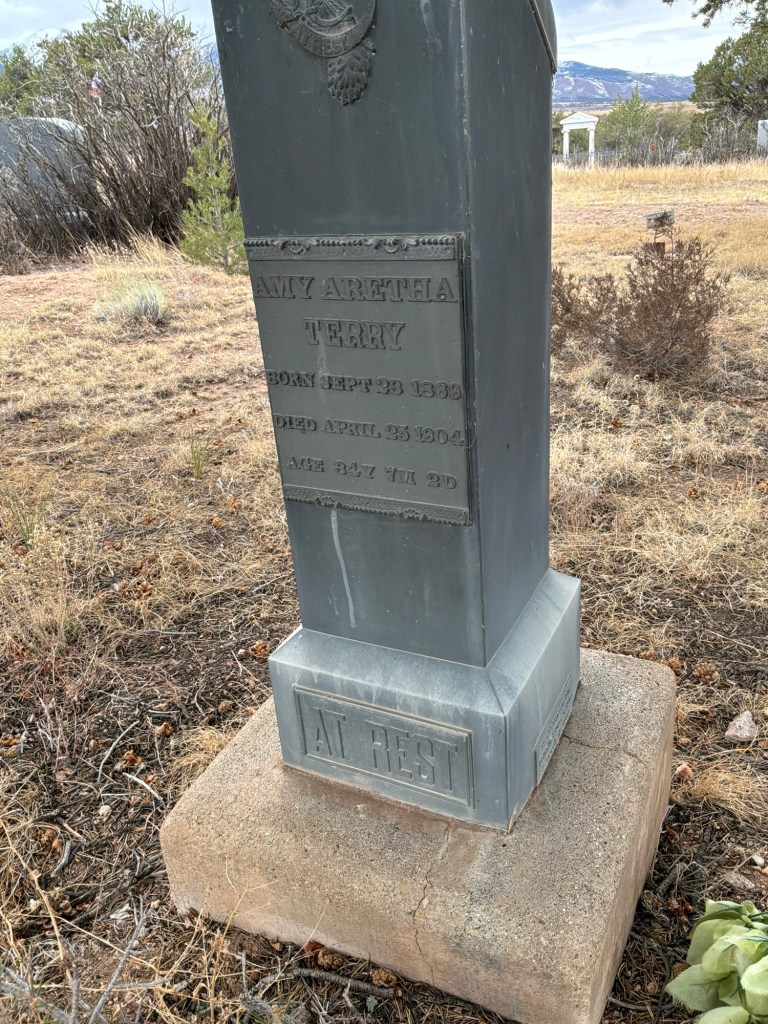
You can look at pioneer era cemeteries and usually notice them quickly by the blueish tint. When you approach the headstone, it is very easy to read and has very crisp edges. They are now proven to last pretty well aside from the screws to hold the plaques on and they can sag or break, but all stones can do the same. They were listed in catalogs, often sold by salesmen who carried the catalog with them. This stone is commonly mistakenly called a Sears Order Stone, but this is incorrect. Sears did have a whole catalog available with many stones also, just not the “Zinkers”.
Thanks for reading!.
*Disclaimer, I’m not a historian, scholar or writer. Ask my high school teachers, they’ll confirm that. I do my best to find information and I’m always open to edits and corrections when needed. I would never post anything incorrect unintentionally. I only mean to honor the lives that were with the stones and information that I can find. I have a love for cemeteries and ghost towns. Cemeteries are full of stories, sometimes I can find them, sometimes I can’t! Be respectful if visiting any of the places I share. These places won’t be around forever, especially if not treated with the utmost in respect. Want to see more? Visit our blog listed in our Bio!
 Not Forgotten Colorado
Leave a comment